Nepal Rhino Conservation for Schools
Conservation, cultural exploration, and personal development


What’s included

Reflective Journals – Upon Request

Flights – Upon Request

Travel and Medical Insurance

Fundraising Advice
Trip Overview

Protect endangered rhinos
Build your knowledge of conservation techniques, and survey Greater One-horned Rhinos, Bengal tigers, crocodiles, vultures, and colourful birds.

Explore forest and safari
Experience the lush beauty of Nepal’s Terai region and embark on an unforgettable safari through Chitwan National Park.

Experience the soul of Nepal
Live in a rural Nepali village, immersed in the country’s rich culture. Try traditional dances, explore sacred sites, and visit colourful markets.

Develop understanding
Learn from local experts on community-driven conservation efforts, understanding the balance of human and wild habitats.
What you can expect
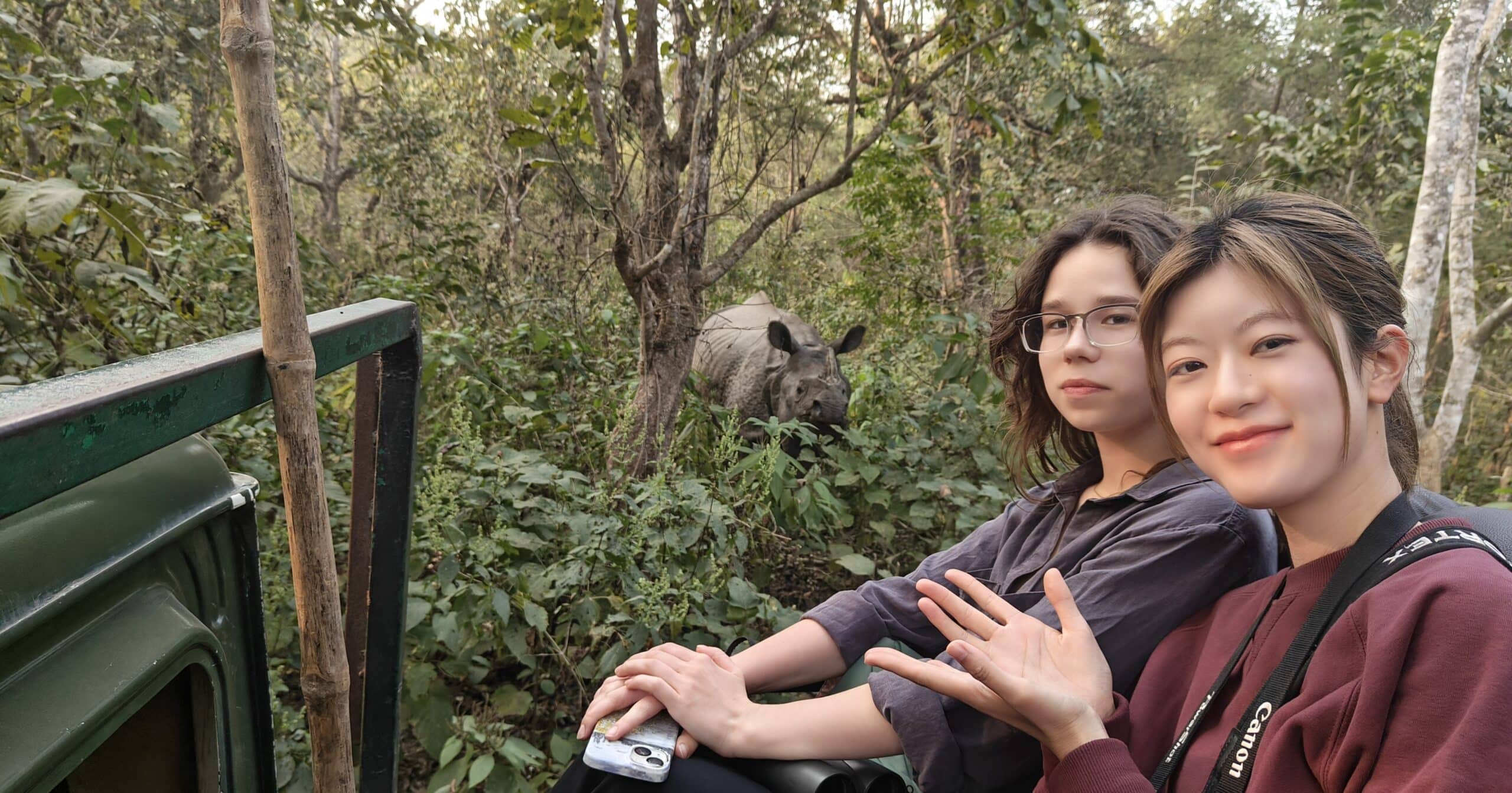
Your unique home in Nepal will be a small village within the Community Forests that border Chitwan National Park, a vital habitat for the endangered Greater One-Horned Rhino, as well as many other wildlife species – including Bengal tigers, Sloth Bears, monkeys, wild boar, various deer, and over 544 recorded species of birds.
Hands-on field research
Your days will be split between hands-on conservation fieldwork and structured learning, guided by local experts. Expect to track rhinos, map animal movements, and conduct biodiversity surveys. You’ll also help to maintain this critical buffer zone through tree planting and anti-poaching patrols.
School education
Alongside this, you’ll visit local schools to lead wildlife education sessions, help plant trees with students, and share the importance of environmental stewardship with the next generation. In the evenings, you’ll have plenty of time for reflection, group discussion, and cultural exchange, helping you connect your daily activities to wider environmental and social challenges.
Lasting impact
By the end of the programme, you’ll leave with new research skills, a deeper appreciation of Nepal’s biodiversity, and a strong sense of how community-led conservation protects threatened species and their habitats.

Why Nepal for your Conservation and Environment programme?
Nepal offers a unique setting for active conservation learning in a globally significant context. The Community Forests of Chitwan provide a powerful case study of how humans and wildlife can co-exist, with buffer zones serving as vital spaces that balance ecological needs with local livelihoods. These forests are home to a remarkable diversity of species, giving students the chance to encounter wildlife first-hand while playing an active role in its protection.
A defining feature of this programme is the opportunity for students to contribute directly to safeguarding the endangered Greater One-Horned Rhino. Alongside this, they will build practical skills in ecology and environmental science, while developing cross-cultural understanding through engagement with local communities.
By bringing academic lessons to life—whether in conservation, biology, geography, or ethics—the programme fosters leadership, empathy, and a strong sense of environmental responsibility. It is an enriching and impactful experience that strengthens curriculum outcomes through immersive fieldwork and meaningful service.
Start planning your trip today

Call +353 (0)1 571 5080 to discuss special discounts or group bookings.